

ICYMI: Elected Officials and Public Health Advocates Call for Expanding Access to Smoke-Free Products for Veterans and Service Members
As military personnel face disproportionately high smoking rates, the need to prioritize harm reduction is clear.
In case you missed it, The Hill recently hosted a policy discussion, Serving Those Who Serve: Embracing Tobacco Harm Reduction, which featured elected officials, policy experts, veterans and military advocates highlighting the disproportionate toll cigarette smoking takes on the military community. With more than one in five U.S. veterans continuing to smoke – the leading preventable cause of death and disease in the U.S. – there is a critical need for access to less harmful alternatives to ensure the health of our service members remains a priority.
The U.S. Food and Drug Administration (FDA) has confirmed that cigarettes – which have a long history in U.S. armed forces culture – sit at the top of the risk continuum. Yet policymakers, regulators and military leadership have been slow to encourage service members to make the switch to reduced risk products such as nicotine pouches and heated tobacco products (HTPs) that have proven successful in helping adults move away from cigarettes in Sweden and Japan, respectively.
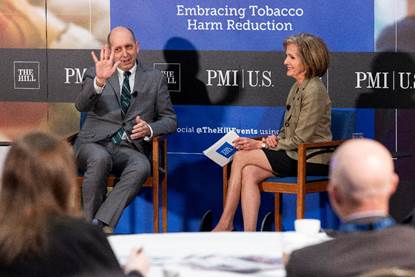
To begin the discussion, Principal Deputy Assistant Secretary of War for Health Affairs Dr. Stephen Ferrara shared his views on reducing the burden of tobacco-related disease among the military, telling The Hill Contributing Editor Kathleen Koch, “We are going to do everything … to mitigate that risk and continue our tobacco harm reduction techniques.”
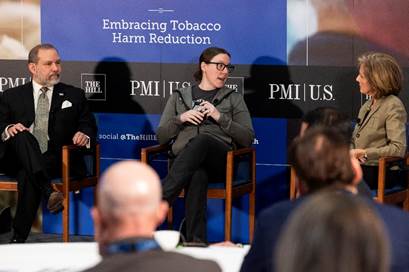
During the event, Dr. Brian Erkkila, head of U.S. scientific engagement for Philip Morris International’s U.S. businesses; Chelsey Simoni, co-founder and chief health officer of the HunterSeven Foundation; and Dr. Tom Price, former U.S. Secretary of Health and Human Services (HHS), pointed to an education gap that is fueling this disproportionate toll. They cited data showing that nearly 80 percent of physicians incorrectly believe nicotine causes cancer and called on military leadership and policymakers to help close this troubling gap.
Dr. Erkkila noted that “most people think nicotine causes cancer. It does not. And so that hinders people’s ability to transition from that most harmful product to something that delivers nicotine that’s much less harmful.”
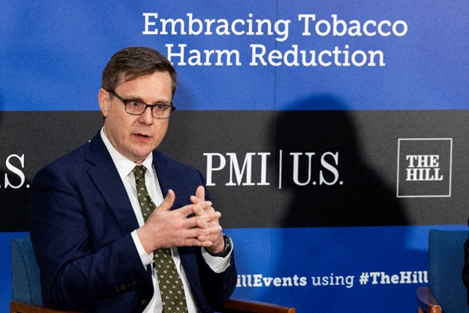
“One of the biggest things we see is that a lot of veterans, service members and providers don’t understand the difference between tobacco and nicotine,” said Chelsey Simoni. “One is addictive – nicotine – and one causes cancer – tobacco.”
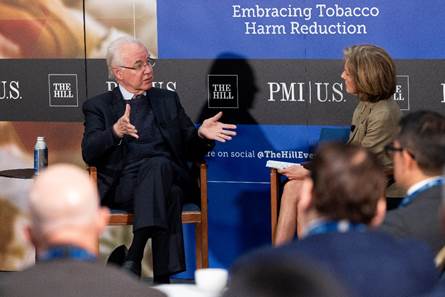
Dr. Price echoed that concern, saying, “We’re not doing enough education at every single level, because if we were, we wouldn’t see the numbers that we’re seeing now.”
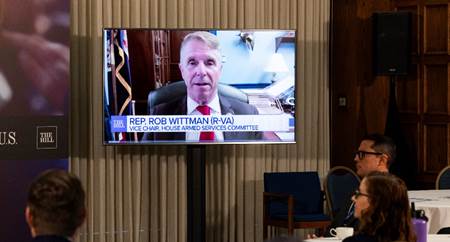
U.S. Congressman Rob Wittman (R-VA-01), vice chair of the U.S. House Committee on Armed Services, called on his colleagues in Congress to take meaningful action to protect the men and women who put their lives on the line every day, stating that “we ought to be doing more to let the active-duty force know, by the way, here’s a way that you can replace your smoking habit with something else.”
Lindsay Mark Lewis, CEO of the Progressive Policy Institute and a former cigarette smoker, shared how HTPs changed his life, “I don’t think I would have survived COVID had I not had IQOS … In 2018, my lungs were 165 years old. Today they’re 53.”
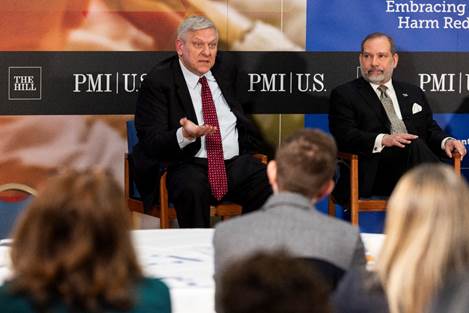
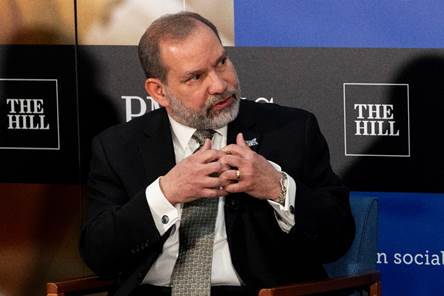
Danny Vargas, founder, chairman and CEO of the American Latino Veterans Association, added, “I think acknowledging that there are alternatives is the first step.”
While ultimately stressing that adults who do not smoke should not start, and adults who smoke should quit, the experts agreed there is a clear need to improve the FDA’s approval pathway for reduced-harm products, as well as an urgent need for greater education among policymakers and physicians to better protect the health of service members and veterans.
###